Why Your Solar Structure Matters More Than The Panels
Most installers save costs on iron frames that rust in 3 years. Here is why we strictly use Hot-Dip Galvanized Steel engineered for 170 km/h winds.
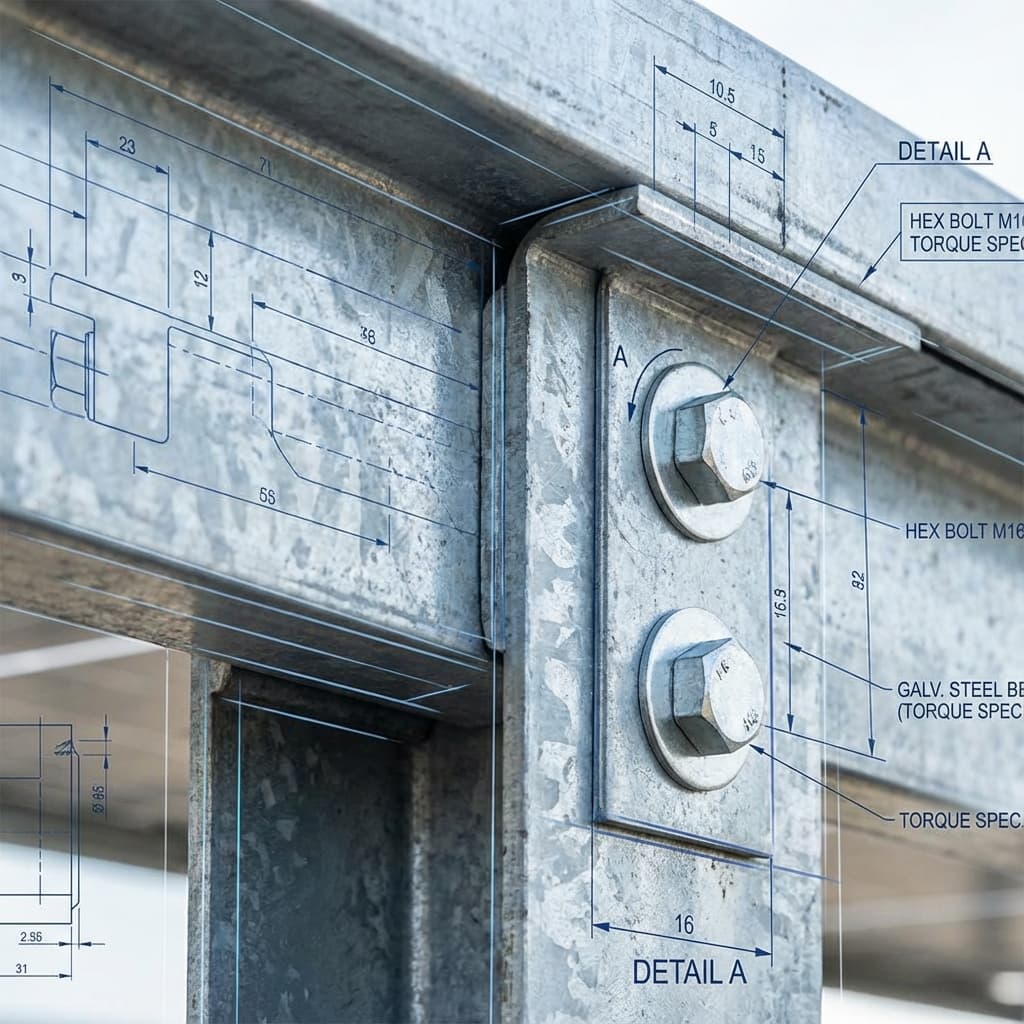
The Hidden Danger of "Cheap" Solar
When comparing solar quotes, many homeowners focus solely on the panel brand (Tata, Adani, Waaree). While important, the panels are only as good as the structure holding them. A solar system is a 25-year investment. If the structure rusts or bends in a storm after 5 years, your warranty is effectively void.
The Unisolar Standard VS Local Fabricators
Local Iron Angle (Typical)
- ❌ Painted Iron (Rusts in 2-3 years)
- ❌ Welded on-site (Weakens metal)
- ❌ No wind load calculation
- ❌ Risks roof leakage
Unisolar HDG Structure
- Hot-Dip Galvanized (Rust-proof 25+ yrs)
- Nut-Bolt Assembly (Zero welding)
- Tested for 170 km/h cyclones
- Japanese layout technology
Cyclone-Proofing is Not Optional
Climate patterns are changing. North India sees high-velocity dust storms every summer. Our structures are designed with Aerodynamic Uplift Resistance. We use concrete ballasts (weights) combined with chemical anchoring to ensure your roof remains leak-proof while holding the panels firm against hurricane-force winds.
Why we use Nut-Bolt Assembly?
Welding destroys the protective zinc coating of galvanized steel, creating an entry point for rust. We strictly use a nut-bolt assembly system. This not only preserves the rust-proof integrity but also allows for modular expansion or relocation of the system in the future.